The Indonesian archipelago is made up of 13,677 islands,
the best known of which are Java, Sumatra, South Borneo, West Irian
(New Guinea) and Bali. While Bali has a unique Hindu-Buddhist culture,
the rest of the islands are Muslim, a result of proselytism and military
incursions between A.D. 1275 and 1520, Islam having first been
introduced by merchants from India and Persia.
The
two major kingdoms prior to the Muslim takeover were the Sriwijaya
Empire, beginning in the fifth century with its capital in Jambi (South
Sumatra), and the Majapahit Empire, which began in the 13th century with
its capital in Java. The Majapahit Empire extended all the way to the
southern Philippines, where an interchange of martial arts occurred as
the Filipinos adopted the keris (Indonesian dagger) and Melayu-style
fighting arts before integrating the rapier and dagger techniques of
Spanish conquerors.
In the 15th century, European
colonial powers turned their eyes to the “East Indies,” which they saw
as the “Spice Islands” because of their natural supplies of clove and
nutmeg. In 1596 the Dutch, under the command of Cornelis de Houtman,
solidified their hold on the islands, forcing out Portugal and the other
European colonialist traders. Eventually the Dutch monopolized the
spice trade, setting up the East Indian Company, Verenigde Oostindische
Compagnie.
Indonesian patriots fought the company as
best they could, using silat’s traditional weapons against Dutch
firepower. Needless to say, firearms ownership was forbidden to native
Indonesians, and even metal, from which edged weapons could be made, was
restricted. The arts themselves had to be taught in secret.
The
original system of pentjak silat dates back 4,000 years, and the first
moves copied the strikes of animals such as monkeys, tigers and snakes.
It provided defense against wild animals, bandits, madmen and foreign
invaders. Its principal weapons were the staff and various bladed tools.
 Badik (Photos courtesy of Eddie Jafri)
By
the time of the Dutch conquest, Indonesian martial arts had already
developed into complete systems. Except for primitive decapitating moves
practiced with mandau jungle knives by the Dayak tribes of Borneo,
virtually all Indonesian styles had developed defensive and offensive
techniques for various weapons. The blade was emphasized over the empty
hand or blunt instruments. Even today, there are more knife and sword
designs in Indonesia than any other place in the world.
The
traditional styles were adapted to modern combat first against the
Dutch and later the Japanese. The objective was to infiltrate so close
to the enemy that he could not use his rifle. During the early days of
the Dutch conquest, this meant working against a single-shot musket, the
objective being to avoid the first shot and then the bayonet.
The
Acehnese of Sumatra developed a kicking style whereby the unique
rencong knife was held between the toes to compensate for the superior
length of the rifle’s bayonet. The bayonet could be parried with either a
golok or another field knife, then the rencong was kicked into the
groin. Such frontal combat could be suicidal against the Japanese in
World War II, who were armed with modern repeating weapons, so
Indonesians later emphasized subterfuge and assassination techniques.
The
night attack, stalking of sentries and stragglers, and poisoning of
officials became tactics of choice. Even today, poisoning is taught at
the higher levels of silat for use against one’s most dangerous enemies.
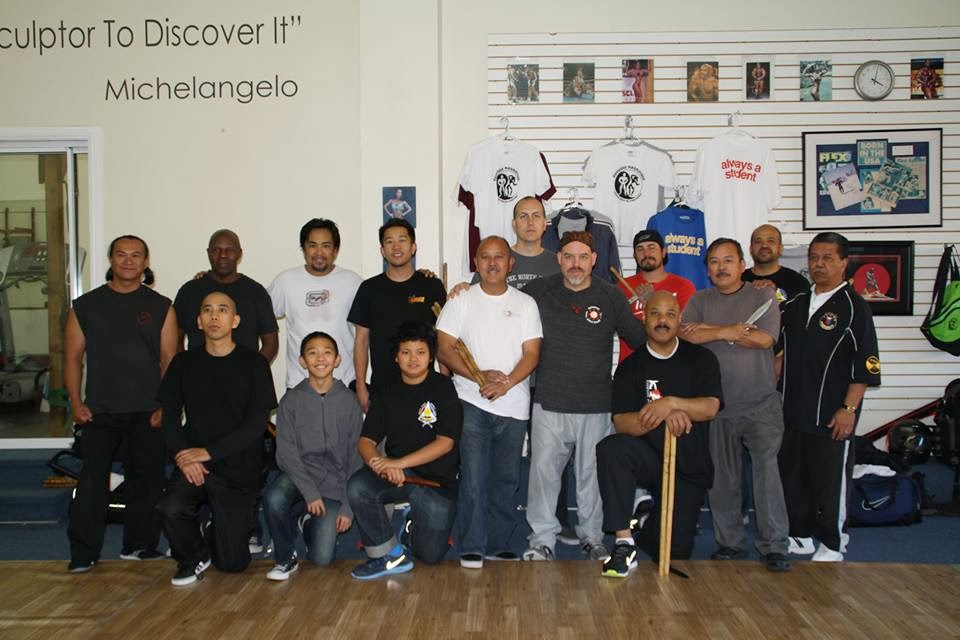
The Silat master pictured here taught Philippine stick techniques to his students because Indonesian
arts do not give the stick special emphasis. Police officers and those
who need nonlethal self-defense methods can use the techniques to good
effect. He also teaches silat empty-hand techniques, although most of
his students are not expected to strike banana trees with punches and
kicks as he had to in his early training in Sumatra. Currently, most of
his teaching is devoted to the Indonesian blade, the core of the old
styles. The following are the silat weapons that he considers the nine
deadliest.
 Keris (Photos courtesy of Eddie Jafri)
Keris
The
keris (also spelled keris) is the national weapon of Indonesia and the
oldest distinctive weapon in that culture. It is found throughout the
archipelago, as well as in Malaysia and the Philippines. It was the tool
of ancient heroes and kings, becoming a symbol of both courage and
beauty. Sultans had elaborate versions of the kris made for them by
famous bladesmiths. Keris blades are hammer-welded of special iron, even
meteoric iron.
According to legend, Empu Ramadi
around A.D. 230 made the first keris. Early kerises were leaf-shaped and
were called pasopati, paso or pisau, meaning knife, and pati, meaning
deadly. Antique kerises are kept as heirlooms or votive objects, and
some are said to possess magic power. The curved blade appeared around
A.D. 329. The number of curves is always odd, and the correct number for
a particular owner is based on a thumb-beside-thumb measuring ritual
accompanied by “lucky” incantations.
The wavy blade
or sarpa lumaku (walking serpent) was perfected and began to decline in
the 15th century, the last period of “magic” kerises. The pamor
(Damascus) blade-welding technique also began to die out after the
Majapahit era. Hammer-welding three metal bars containing nickel iron
and meteoric iron created the distinctive patterns. This allowed varying
degrees of hardness in the blade, combining sharpness with shatter
resistance. Rust and even poison were sometimes added to make the blade
deadlier.
Each part of the keris blade has a name, as
do the handle and sheath. The blade is attached to the handle by a
short tang, which is not much of a disadvantage in a weapon used
primarily for thrusting.
Kujang
According
to tradition, the kujang, with its curved blade, was the weapon of West
Javanese kings. It is said to take its shape from the antler of a deer.
Many Indonesians believe it has mystical power and can bring good luck.
Rencong (Photos courtesy of Eddie Jafri)
Rencong
The
L-shaped rencong has a 3-to-10 inch blade made of white iron or yellow
metal, with a sheath of buffalo horn, ivory or exotic wood. The
pistol-like grip allows powerful one- or two-handed blows as well as the
kick-thrust. Because Acehnese are usually barefoot, developing the
necessary foot strength and suppleness for kick-thrusts was not as
difficult as it sounds. Boys would practice walking or running with
sticks held in their toes until they could easily maneuver the rencong.
The
blade was carried upward between the first two toes, and the handle
curled under the others. Some rencongs were not even sharpened because
they were designed for stabbing. Sometimes it was left impaled in the
victim’s belly or groin, held by the barbs at the base of the blade.
When used with two hands for a rib strike, the handle could be turned
like a coffee grinder to produce a more destructive wound.
Golok
All
Indonesian silat masters use the golok, especially in West Java. The
blade length of this bolo-style weapon is usually between 12 and 24
inches. They are sometimes coated with scorpion or cobra venom to
increase lethality.
Golok practitioners begin
training by strengthening their wrists and hands. They do this by
swinging sand-filled bottles between the thumb and forefinger. When they
move on to the golok, they first practice techniques against banana
trees or bamboo stalks.
As a jungle knife, the golok
is unequaled. Even the British military issues its own version of the
golok since its commando operations in Malaya (1948-60) and Borneo
(1965-66).
Pisau Belati
The pisau
belati is the universal kitchen utility knife in Indonesia. With a
blade length of 7 inches or less, it is legally sold in any open-air
market. It is carried everywhere by street vendors, fruit sellers, meat
cutters, etc. It is the knife most likely to be available when a fight
breaks out.
Because of its ubiquity, most silat masters use it as one of the training knives.
 Mandau (Photos courtesy of Eddie Jafri)
Mandau
The
mandau comes from South Borneo, the land of the Dayaks. The mandau is a
jungle knife as well as the traditional headhunting sword. The handle
is usually decorated with goat hair or human hair. The mandau may be
used in combination with a shield, and the blade may be coated with
poison for special occasions. While headhunting is supposedly no longer
part of the Dayaks’ animistic religion, there is no doubt that the
mandau is still capable of deadly battle.
Badik
The
badik comes from Sulawesi and is a weapon for infighting. Its blade is
usually 5 to 7 inches in length. The Bugis people of South Sulawesi are
most noted for using it. The Bugis fighting style emphasizes quick and
fatal strikes to the heart, stomach or kidneys. They practice by tying a
sash around the waists of two fighters so that each must sidestep to
avoid the stomach thrust of the other. In combat, the badik blade is
sometimes poisoned.
Celurit
The
Madura celurit is shaped like a question mark. The Madurese use it as a
sickle to cut grass for their cattle but also employ it in self-defense
as part of a martial style called pamur silat. The celurit is difficult
to evade because of its flexibility and hard to disarm because of its
multiple directions of attack. It is sharp enough to cleave skulls or
decapitate heads. The celurit has killed often enough to be notorious.
The Indonesian government now punishes without pardon individuals who
carry one in public.
Tombak
The
tombak (spear) is used in most silat styles. In the old days, it was
used from horseback or for long-distance fighting on foot. Most
traditional spears today are kept at home as decorations, but as late as
1945, they were used in combat against the Japanese. Even sharpened
bamboo spears were pressed into the fight against Japanese and Dutch
oppressors. Sharpened bamboo makes for a slow death, and most enemy
soldiers would have preferred to be shot or stabbed with a sword. The
spear could also be used effectively against a bayonet. They were not
meant for throwing, like a Roman pitumm, but for stabbing, like the Zulu
assegai.
About the Author: David E. Steele is a
Los Angeles-based freelance writer and martial artist whose specialty is
weapons articles.
By David E. Steele